Can a Fume Extractor Really Cut It? Comparing Laser Cutter Air Cleanup Solutions
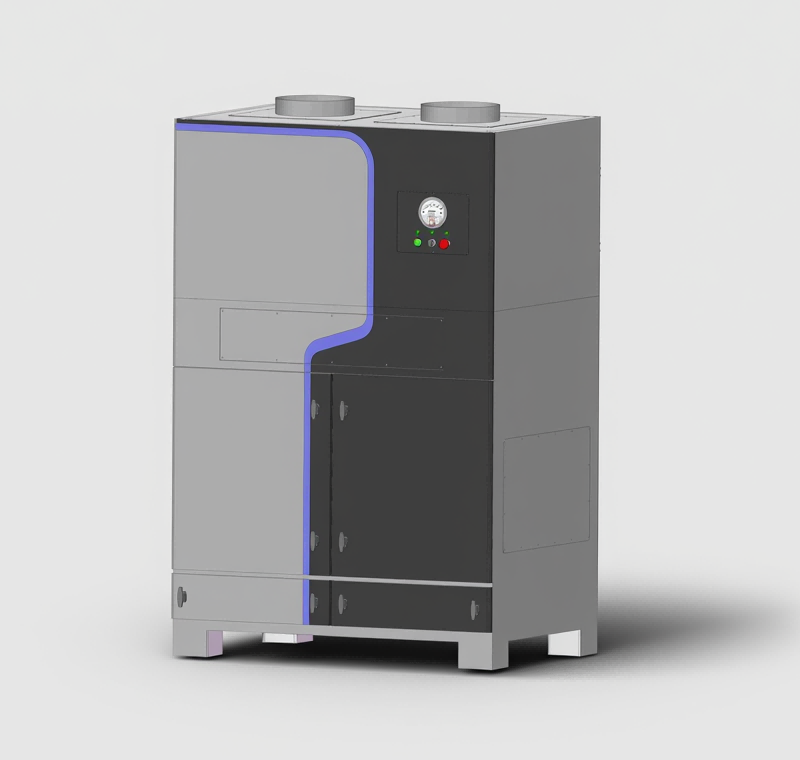
Introduction: Is your shop breathing safely?
Have you ever stood next to a laser cutter while it was running and wondered if the air was actually okay to breathe? I ask because I’ve seen small shops where smoke hugs the workbench, and larger ones where staff complain about headaches after shifts. The laser cutter fume extractor sits between your process and the air your team breathes — but not all extractors perform the same (trust me, I’ve tested more than a few). Recent shop audits show particle spikes of PM2.5 during cutting cycles — sometimes up to five times the baseline. So what should you expect from a real solution, and where do most systems fall short? Let’s walk through the facts and what they mean for your safety and productivity.
Why traditional systems miss the mark
dust collector for laser cutting machine units sold as one-size-fits-all often fail where it counts. I’ve seen floor units with weak blowers and clogged pre-filters. They rely on basic HEPA filtration labels but ignore airflow (CFM) and static pressure, which are what actually move fumes away from the cutting zone. In plain terms: a big fan without the right static pressure won’t pull smoke out of tight work areas. Add poor duct routing and you lose capture efficiency. Look, it’s simpler than you think — capture first, filter second. When capture fails, even the best HEPA or activated carbon media can’t stop fumes from reaching your people.
What’s really failing?
Systems also fall short in maintenance design. Many units use cheap pre-filters that quickly blind the main filter. No one plans for easy access or filter-change alerts. That means shops run with reduced airflow for weeks. I’ve measured units that lose 40–60% of their rated airflow after a month in heavy use. That’s not a small drop — that’s a failure. And noise? Some extractors push up fan speed to compensate, which raises decibel levels and hurts concentration. If you care about consistent capture, pay attention to blower curve, inline pre-filter strategy, and simple maintenance paths. Those are the real winners, not the flashy marketing specs.
New principles for better fume control
Looking ahead, I focus on three design principles that change outcomes: source capture, balanced airflow, and smart filtration. Source capture means getting the exhaust hood or nozzle as close as possible to the cut. Balanced airflow ties the fan capacity to the resistance of your ducting and filters (fan curves matter). Smart filtration mixes media: coarse pre-filter, HEPA for particles, and activated carbon for VOCs. When you combine those thoughtfully, you get a system that actually reduces exposures. I’d rather have a slightly larger footprint that works reliably than a compact unit that sounds impressive on paper but leaves fumes behind. — funny how that works, right?
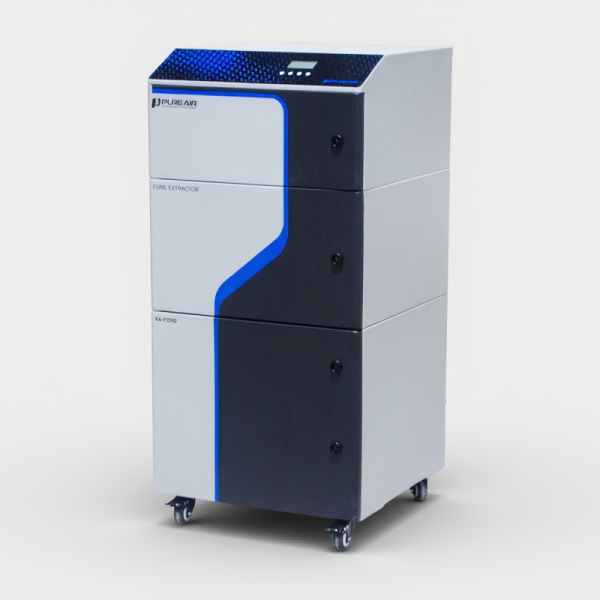 What’s Next: practical steps and measures
I recommend evaluating systems by three metrics. First: capture efficiency at the cut (measured near the nozzle). Second: sustained airflow (CFM) after one month of use, not just on day one. Third: total cost of ownership that includes filter life and downtime. Test for particulate capture and VOC reduction if you cut plastics or coated materials. Also consider modular designs that allow upgrading filters or fans without replacing the whole unit. I’ve seen shops cut maintenance time in half simply by choosing smarter filter trays and better access panels.
To sum up: don’t be dazzled by filter names. Ask for capture data, ask about fan curves and static pressure, and check real-world filter change intervals. If you want a baseline system that performs today and scales tomorrow, look at proven designs and suppliers who publish test data. I’ve worked with brands that back performance with numbers. One of them is PURE-AIR. They’re not magical — they just focus on the basics, and that’s what counts.